
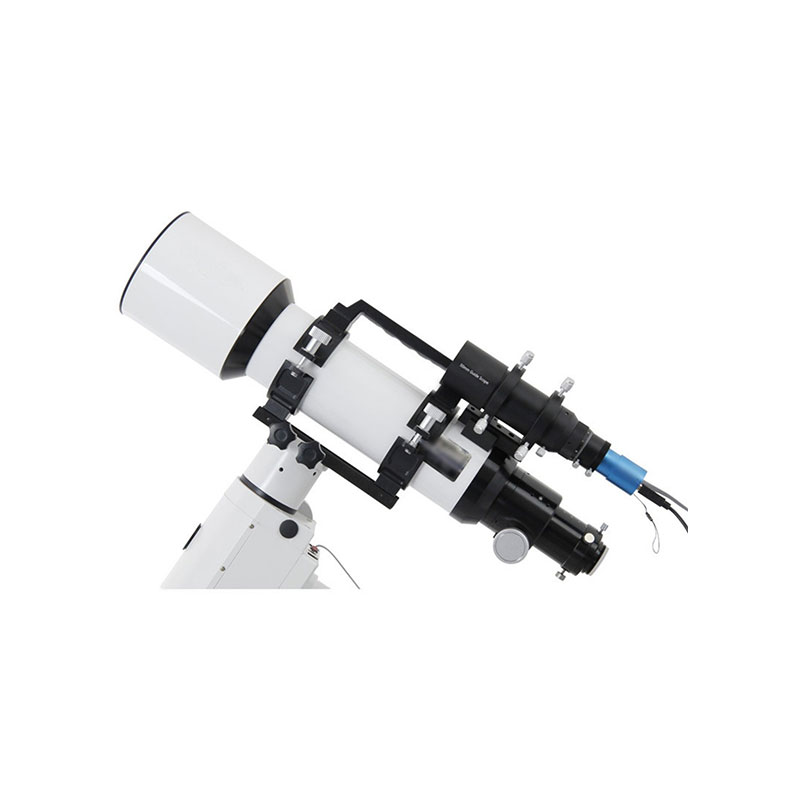
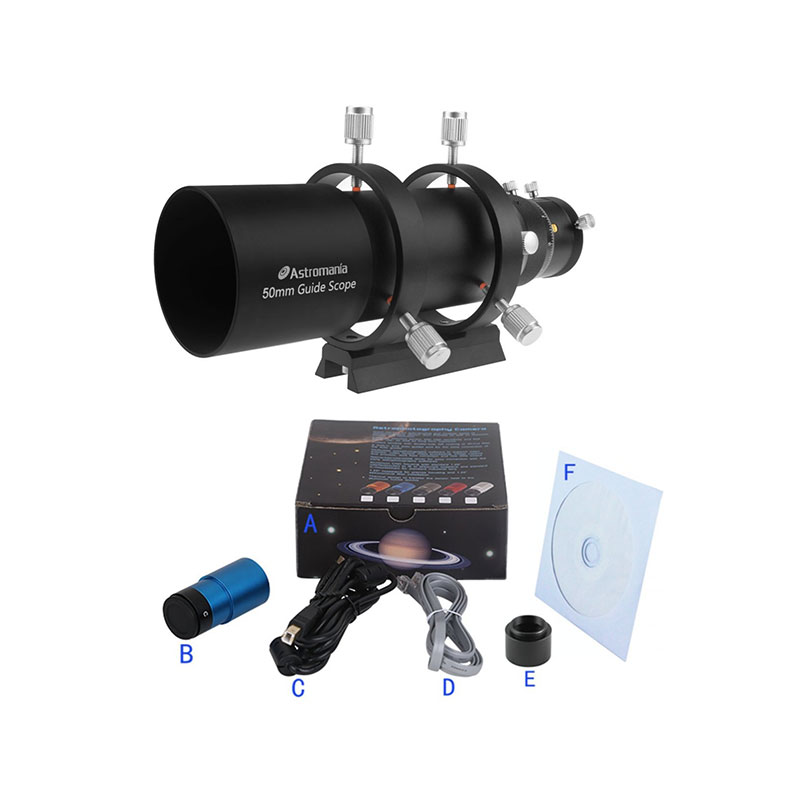
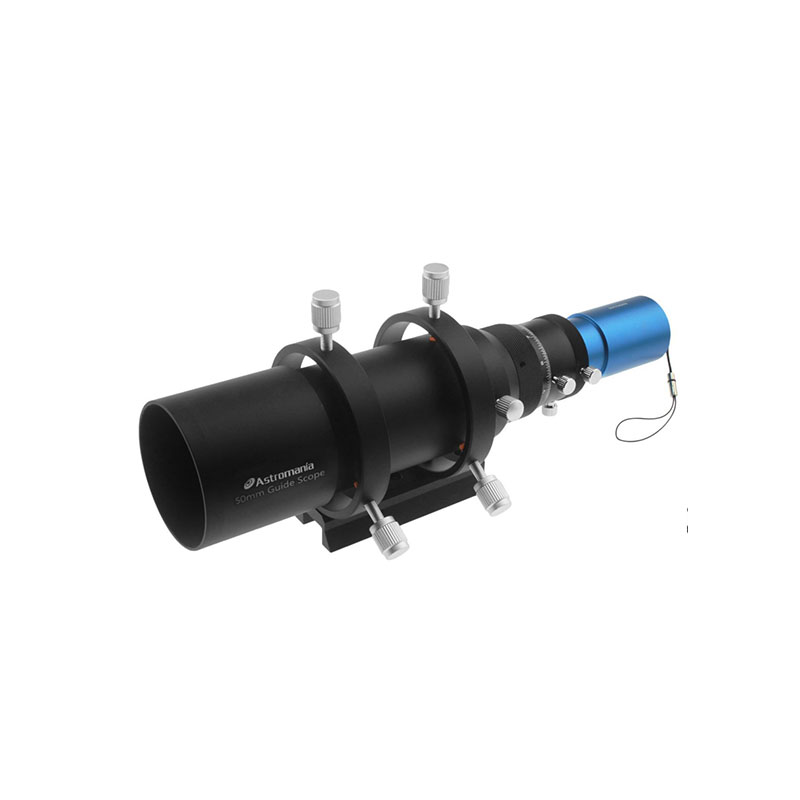
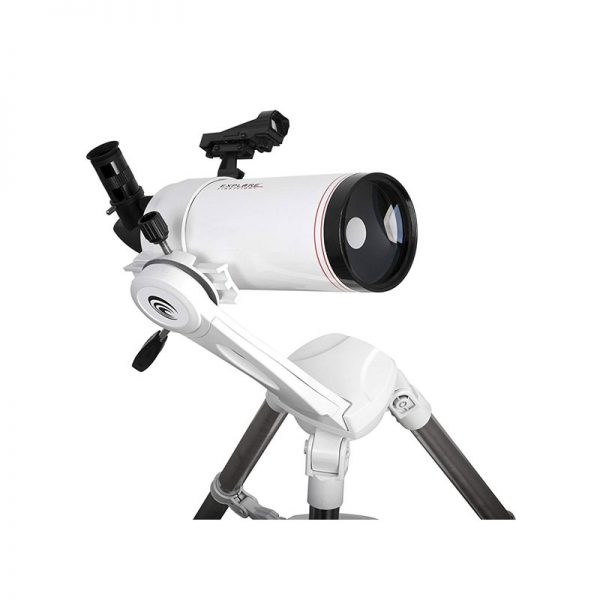
The advantages in a nutshell:(1)Mini guide scope for rapidly locating astronomical objects and guide stars.(2)Designed for both visual and photographic use.(3)Use any 1.25 inch eyepiece from your collection.(4)Worm-gear focuser for rapid focusing – prevents the rotation of camera and eyepiece.
Planetary imaging and guiding camera – the key to successful planetary photos: The CMOS Camera is a highly sensitive planetary camera which can turn you into a successful planetary photographer. The heart of this camera is a sensitive and low-noise CMOS chip. An optimal launching pad for sharp and high-resolution planetary imaging. But this camera can also be used to guide via a guide star.
Large field of view and high resolution: With a resolution of 1280×960 pixels, you can plot a course directly to the planets in our solar system. The wide field of view is ideal for sharp and wide-scale images of the lunar surface. Unlike normal entry-level cameras, this camera offers a much larger chip area.
The robust metal housing is made of black, anodized aluminium: It not only looks solid, but is very sturdy. A milled and knurled focusing ring allows straightforward and precise fine focusing. It comes with matching tube clamps and a Synta-style mounting plate to make assembly and disassembly as simple as possible.
Guiding with the Mini Guide Scope – makes astrophotography easier and needs less equipment: This small guide scope takes does the job of a ‘classic’ guide scope – but it is lighter and much easier to use! Previously, long and unwieldy guide scopes were used to locate a guide star. But this is no longer necessary! The sensitivity of modern astronomy cameras makes this possible. You simply attach the mini guide scope onto your telescope like a finder.
-20%
ASTROMANIA CAMERA EASY AUTOGUIDING SET50 – THE KEY TO SUCCESSFUL PLANETARY PHOTOS
36,500.00 ৳
Astromania Camera Easy Autoguiding Set50. Planetary imaging and guiding camera – the key to successful planetary photos: The CMOS Camera is a highly sensitive planetary camera which can turn you into a successful planetary photographer. The heart of this camera is a sensitive and low-noise CMOS chip. An optimal launching pad for sharp and high-resolution planetary imaging. But this camera can also be used to guide via a guide star. Large field of view and high resolution: With a resolution of 1280×960 pixels, you can plot a course directly to the planets in our solar system. The wide field of view is ideal for sharp and wide-scale images of the lunar surface. Unlike normal entry-level cameras, this camera offers a much larger chip area. Guiding with the Mini Guide Scope – makes astrophotography easier and needs less equipment: This small guide scope takes does the job of a ‘classic’ guide scope – but it is lighter and much easier to use! Previously, long and unwieldy guide scopes were used to locate a guide star. But this is no longer necessary! The sensitivity of modern astronomy cameras makes this possible. You simply attach the mini guide scope onto your telescope like a finder. Or you can use it as a convenient, large finder scope and spend less time locating objects when visually observing. The robust metal housing is made of black, anodized aluminium: It not only looks solid, but is very sturdy. A milled and knurled focusing ring allows straightforward and precise fine focusing. It comes with matching tube clamps and a Synta-style mounting plate to make assembly and disassembly as simple as possible. What is special about our new Astromania guide scope? It has a built-in worm-gear focuser with 10mm displacement, allowing very precise focus adjustment. The mechanism has a fixed orientation – so there is no rotation of mounted cameras or eyepieces – or also the field of view with your guide star – when focusing.
Description


